
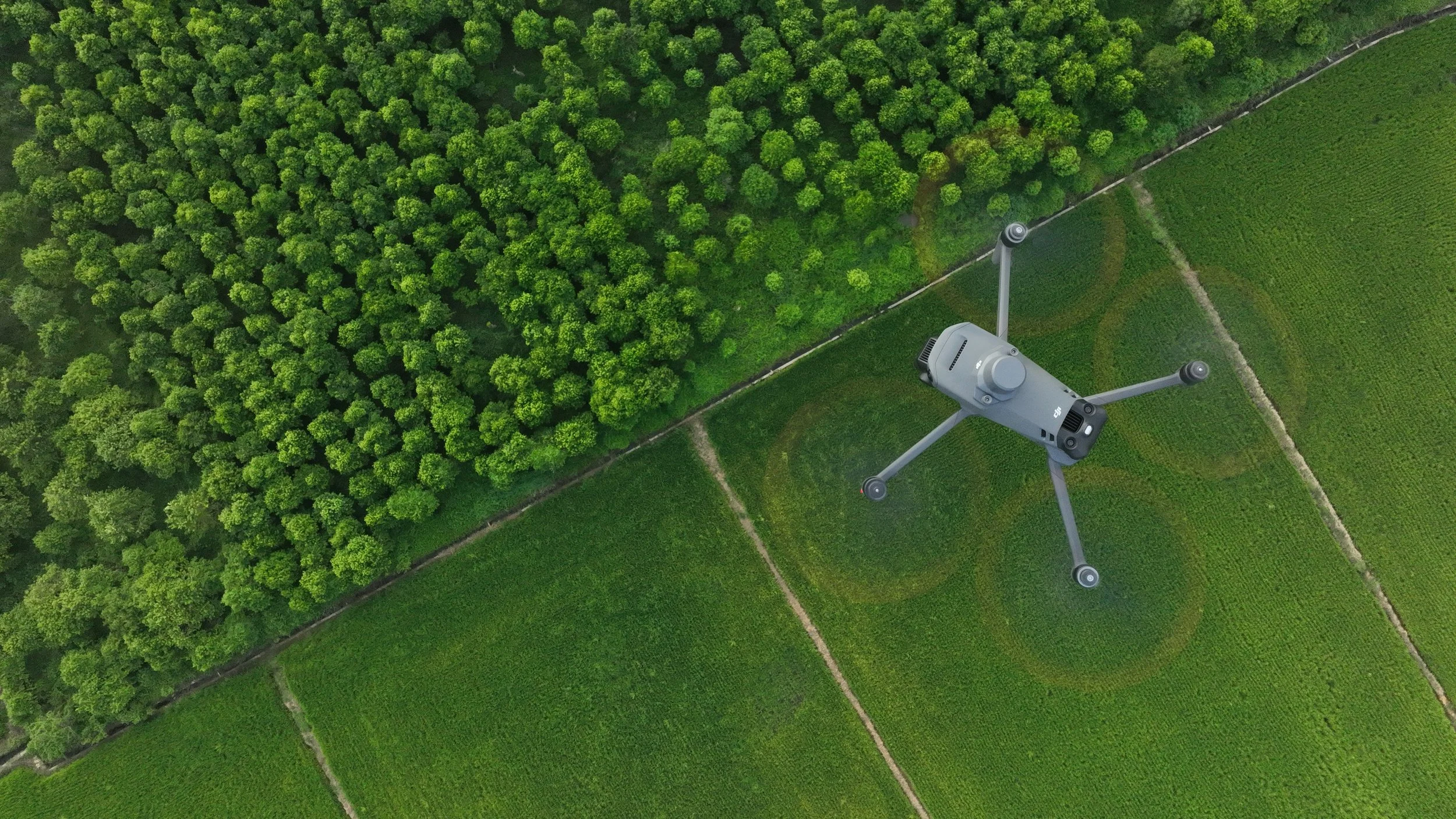
Better Data = Better Growth
Save money on fertilizers, catch disease earlier, improve yields, and more!
We can identify under-performing areas or emerging pest or disease outbreaks early, using a multi-spectrum imaging drone.
The drone measures the chlorophyll uptake in your crops and can monitor nitrogen and moisture uptake as well. Additionally, the camera can penetrate the canopy of late-season crops to assess their overall health in ways visual monitoring cannot.
The final report shows a range of metrics of crop health and can also include application maps, indicating how to most efficiently allocate fertilizers, seeds, or pesticides and where to take physical soil samples to get the most out of the data.
Interested in learning more?
Click here to read about how the data output works here
Click here to read about the range of data-types we offer here
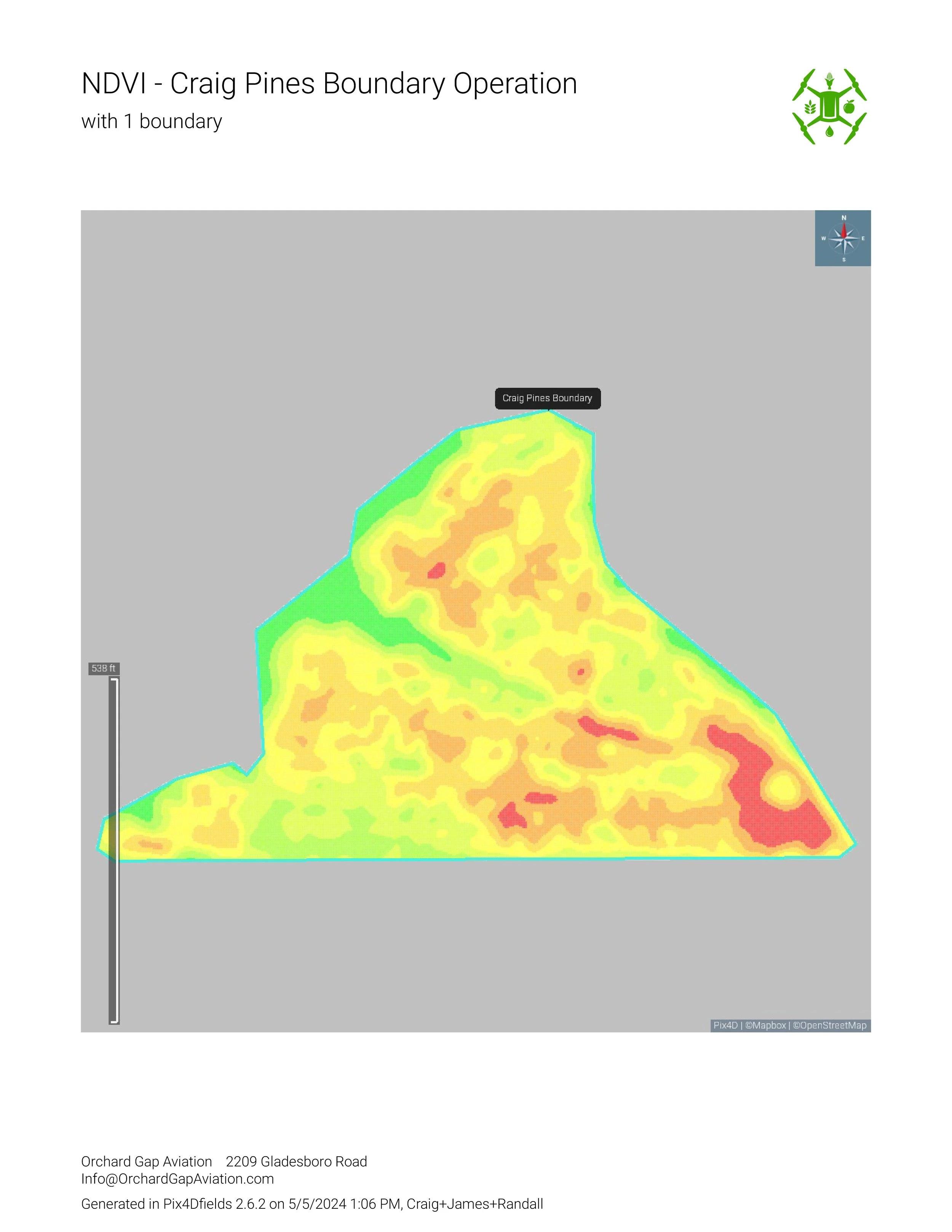
Crop Inspection Reports are $75 per hour (including data analysis) but the first report is free
If you are interested in seeing if an health-assessment or application report is right for you, please contact us by filling out the form below, or call us at (276) 266-4821.
We will beat any competitor’s price by 5%
Including terrestrial applicators!
Applies to all services - Subject to site inspection
Corn Field Example
See below for an example of a client who wanted a report of the efficacy of their pre-planting spraying to kill off weeds that might out-compete their corn
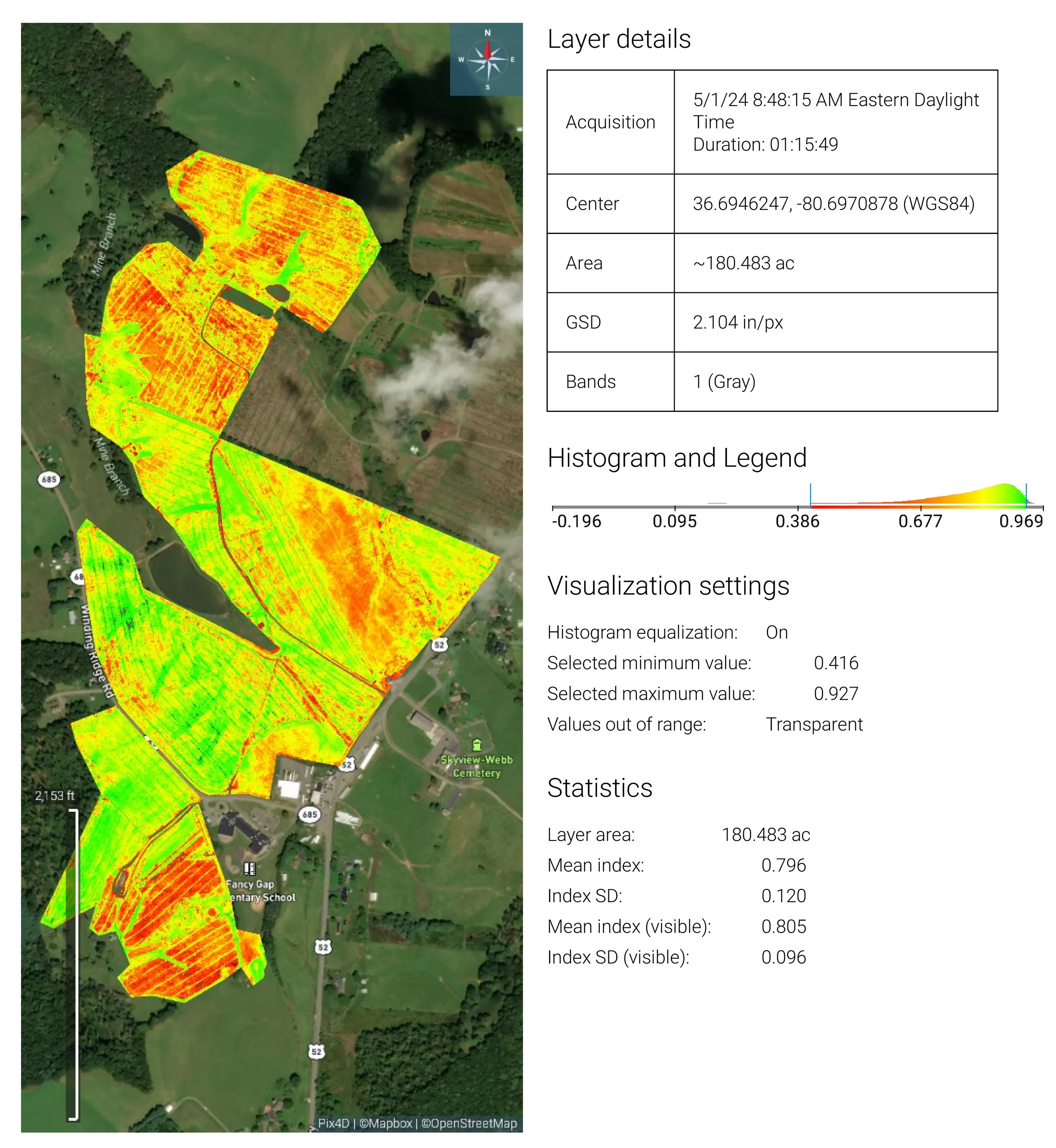
This is the pre-spray report
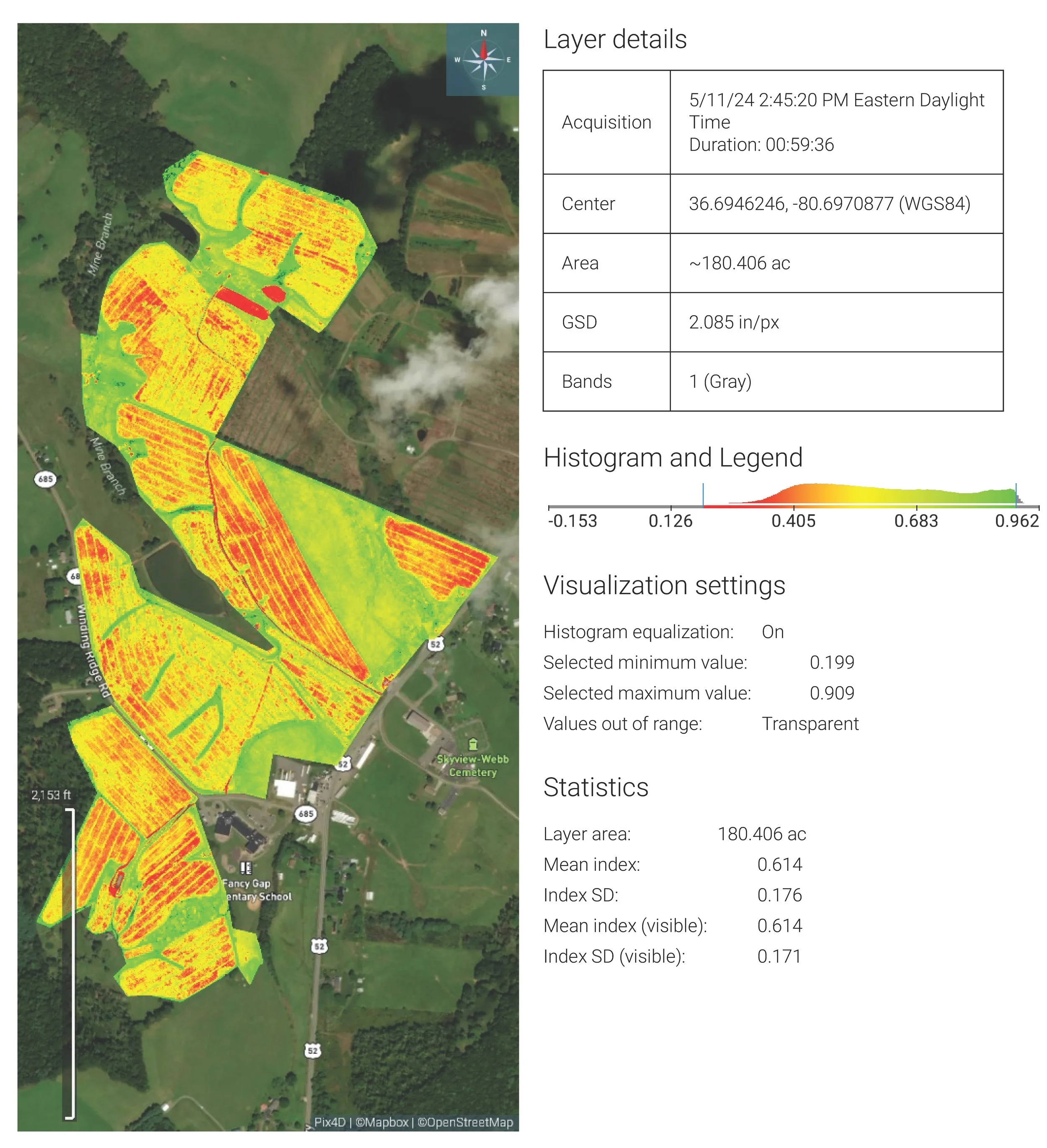
This is the post-spray report after the weeds have had time to die off.
Cleared Timber Remediation Example
See below for an example of a client who wanted a report of where to focus seeding and straw more intensely for a successful remediation effort after clear-cutting a stand of pine trees.
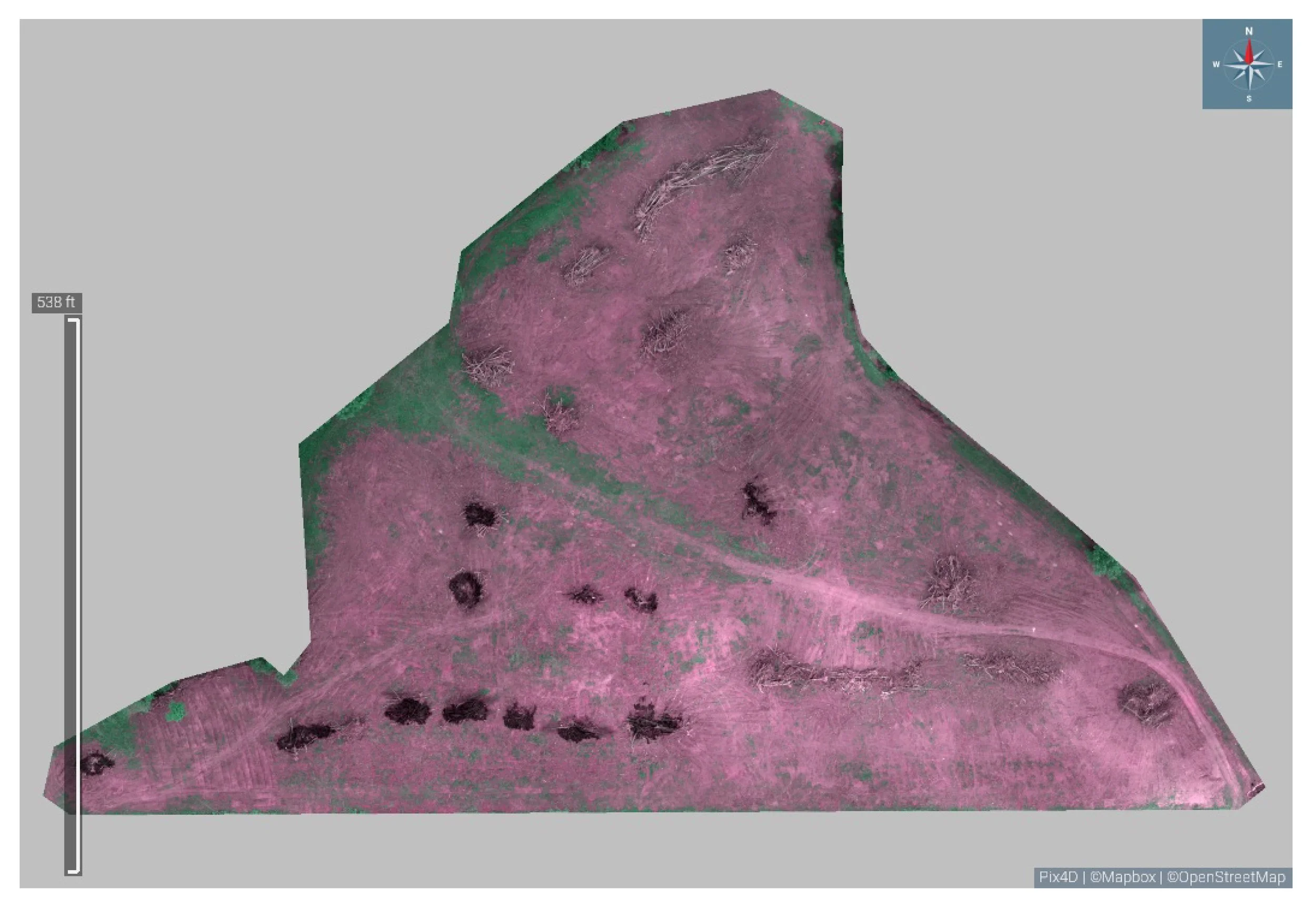
Cleared section of timber that needs to be remediated
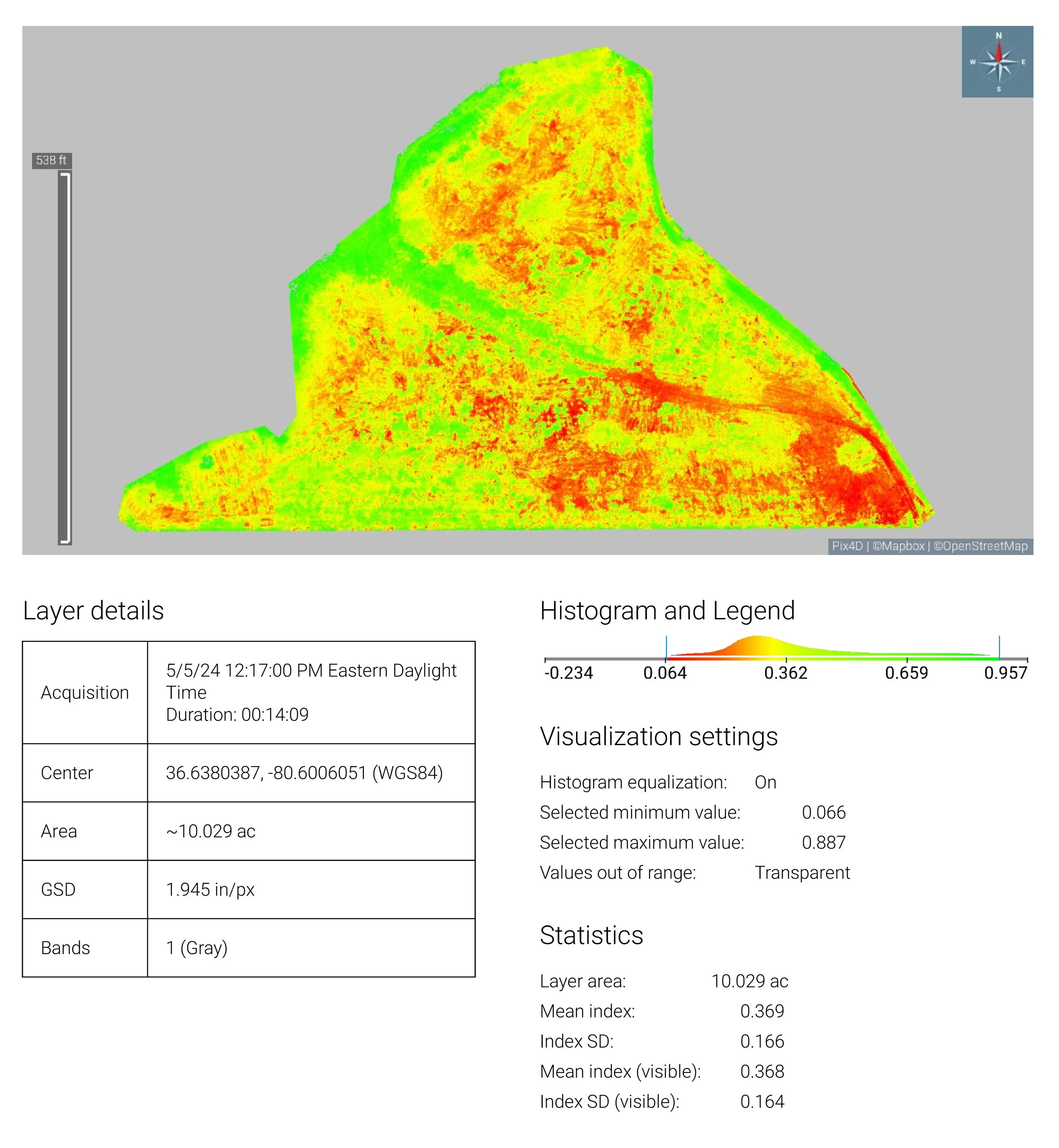
Chlorophyll Activity Health
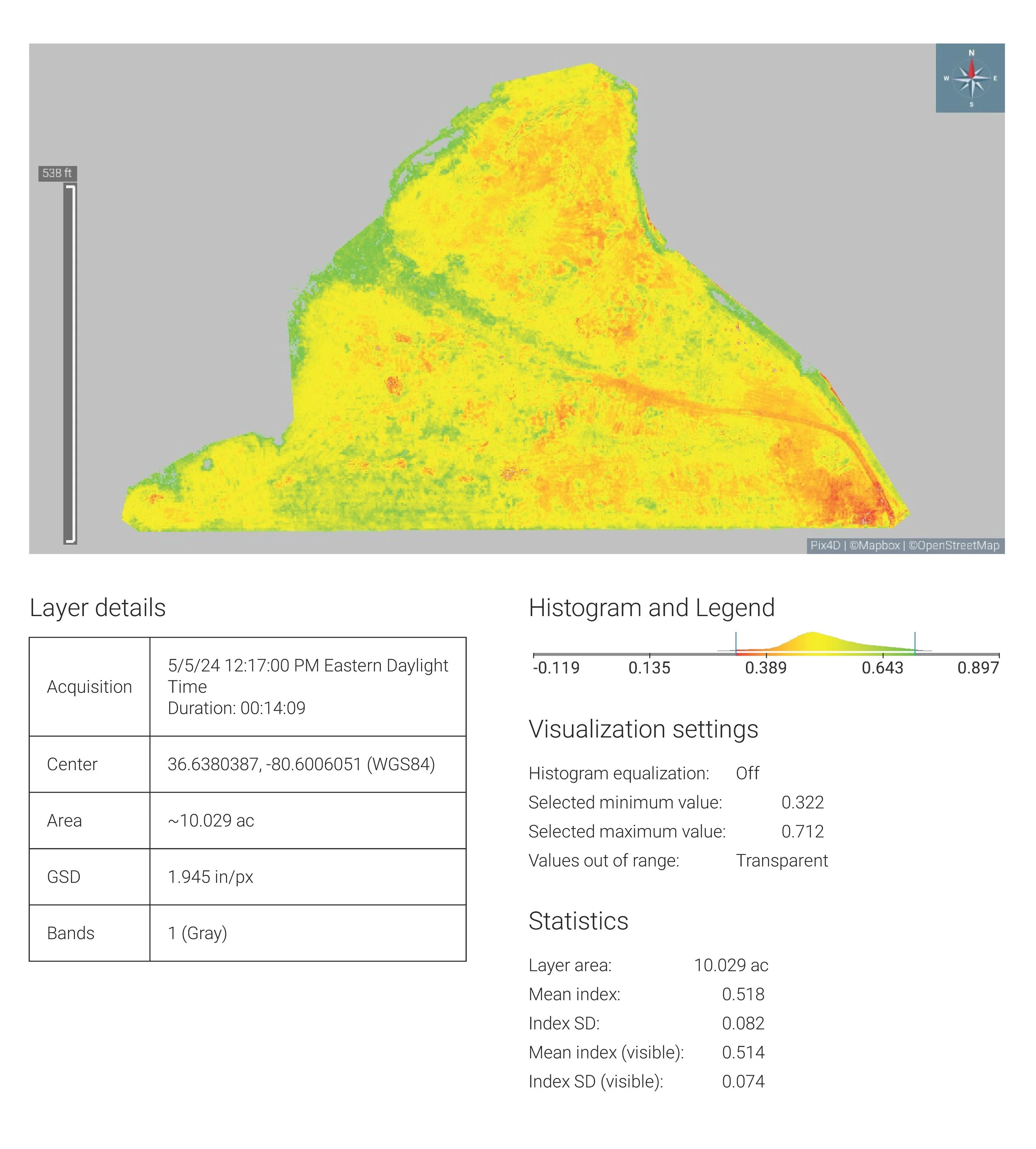
The moisture and nitrogen report can show where to allocate supplementary nitrogen and where water is draining away from
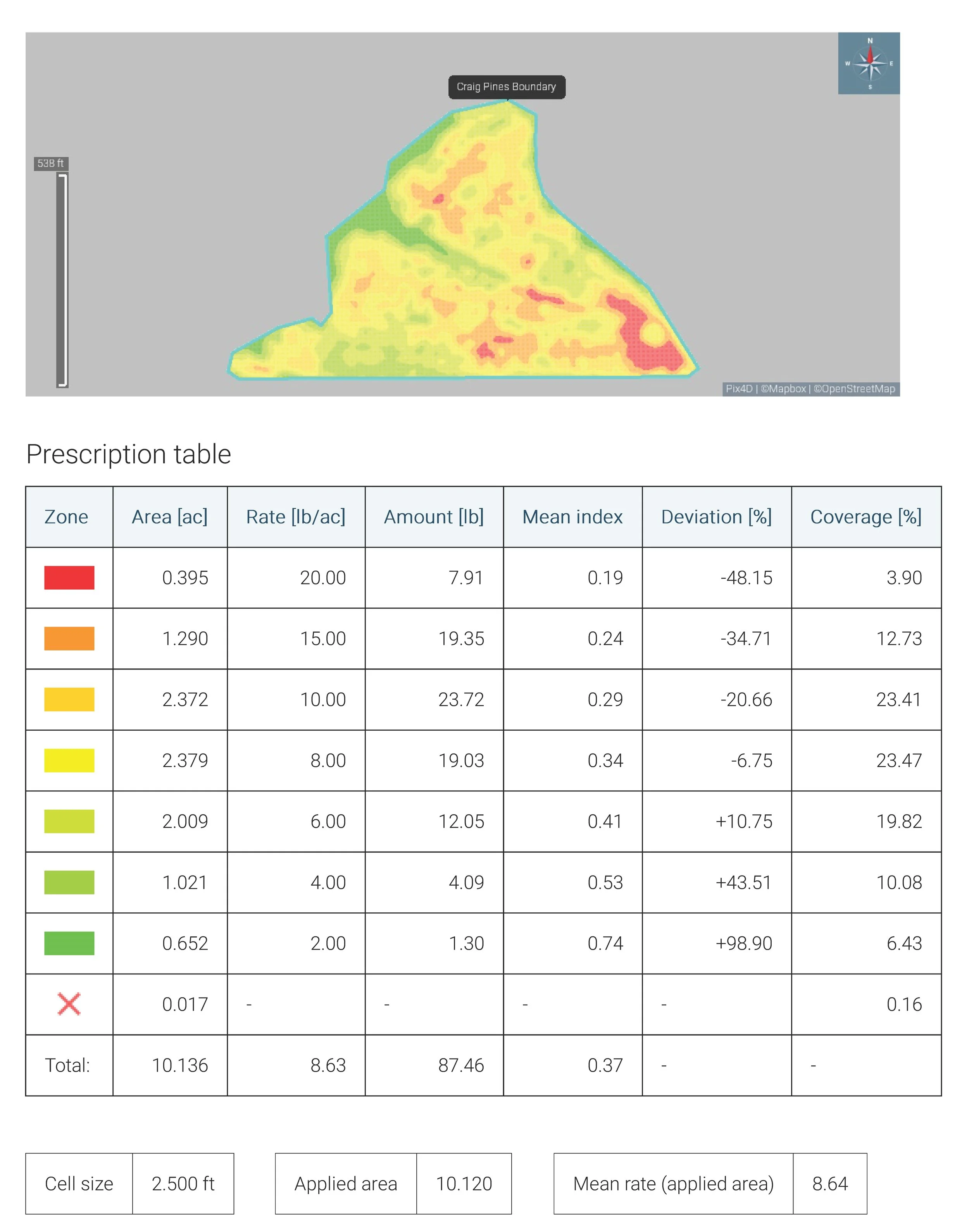
This is the application map recommending how many pounds of fertilizer would be applied at a recommended rate of 50 lbs of fertilizer per acre, showing the amounts for each section.
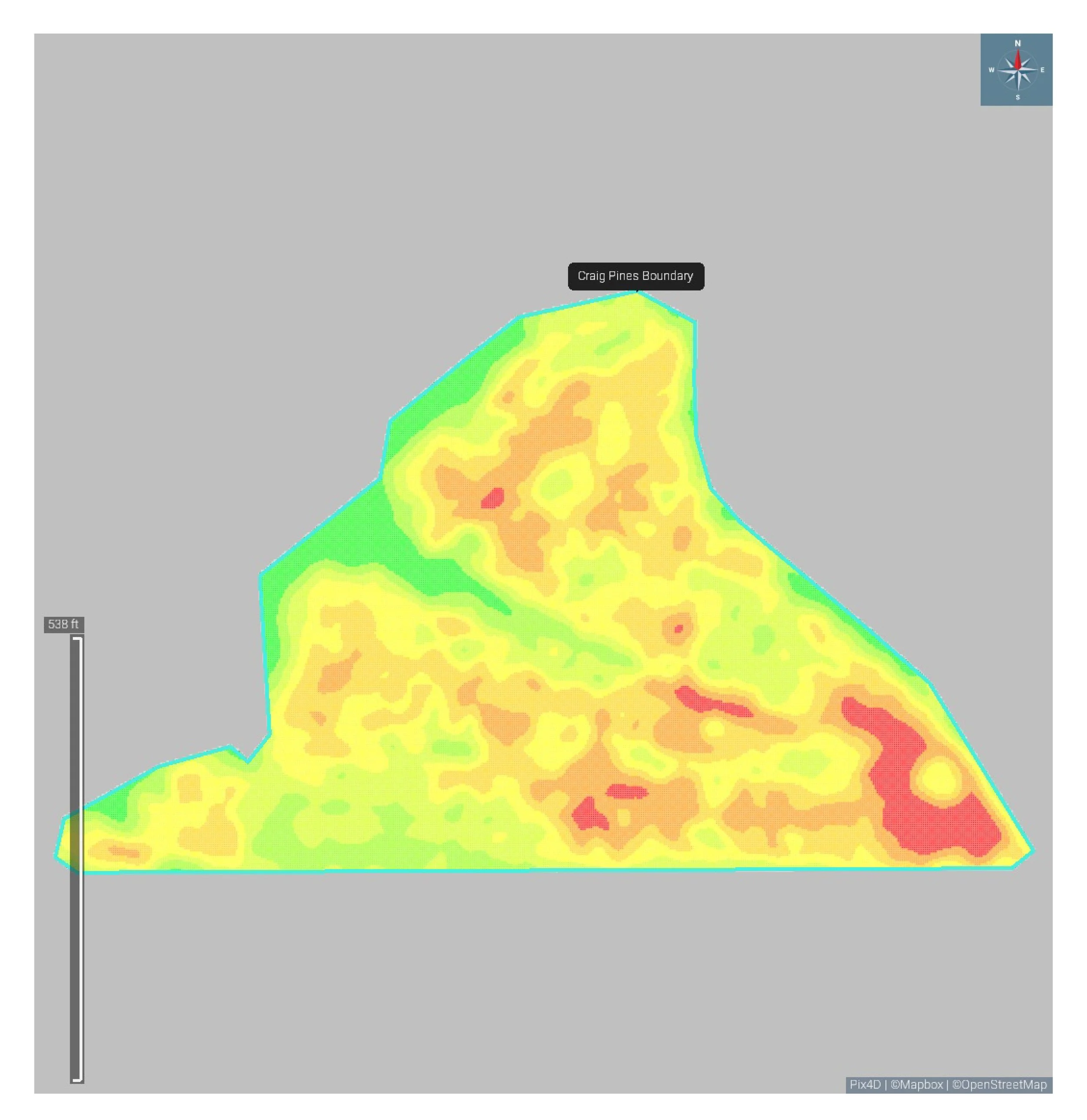
This is the larger image of how the fertilizer should be allocated.